The name Rogers appears throughout North American silver history, creating a maze of companies, marks, and family myths. Among them, Wm. A. Rogers stands out as a brand that bridged American origins with a distinctly Canadian identity. For collectors and restorers, its silverware offers not only aesthetic appeal but also a clear window into the evolution of electroplating, industrial design, and craftsmanship. This article explores how to navigate the Rogers labyrinth and understand the unique place of Wm. A. Rogers in Canadian silver heritage.
ROGERS: THE LABYRINTH OF AMERICAN SILVER
The name Rogers appears again and again in the history of American silver – on sterling, silverplate, flatware, hollowware, and decorative pieces. For collectors, this name is both familiar and confusing: dozens of companies used it, often without any family connection. The number of firms that carried the Rogers name is so large that it is nearly impossible to count them all.
FAMILY TIES AND FAMILY MITHS
The men who ran the various Rogers were sometimes related, but often not. The most famous brand name is 1847 Rogers Bros., established in 1862, but around it sprang a multitude of firms, constantly forming, merging, and dissolving in an endless web of interrelationships.
NOT ALL ROGERS ARE THE SAME FAMILY
Today, more than 40 different Rogers brands appear on the vintage and antique market. Most of them are not related, were not produced in the same factories, used similar names to inspire buyer confidence.
Among them, Wm. A. Rogers stands apart as a separate line that later became part of Oneida.
WHY SO MUCH CONFUSION?
By the early 20th century, Rogers had become almost synonymous with silverware in North America – from Hartford to Niagara Falls, including Canadian branches such as Wm. A. Rogers Ltd. Because of this, collectors must pay close attention to exact marks and dates, from “ROGERS (R)” in 1901 to Oneida-era marks after 1929.
COMMON ROGERS IDENTIFICATION MISTAKES
Confusion among the Many “Rogers”
There are over forty different Rogers brands on the market, and most of them:
– are not related
– are not jointly manufactured
– used similar names to increase buyer confidence
Because of this, newcomers often attribute Wm. A. Rogers items to older “Rogers” lines, or vice versa.
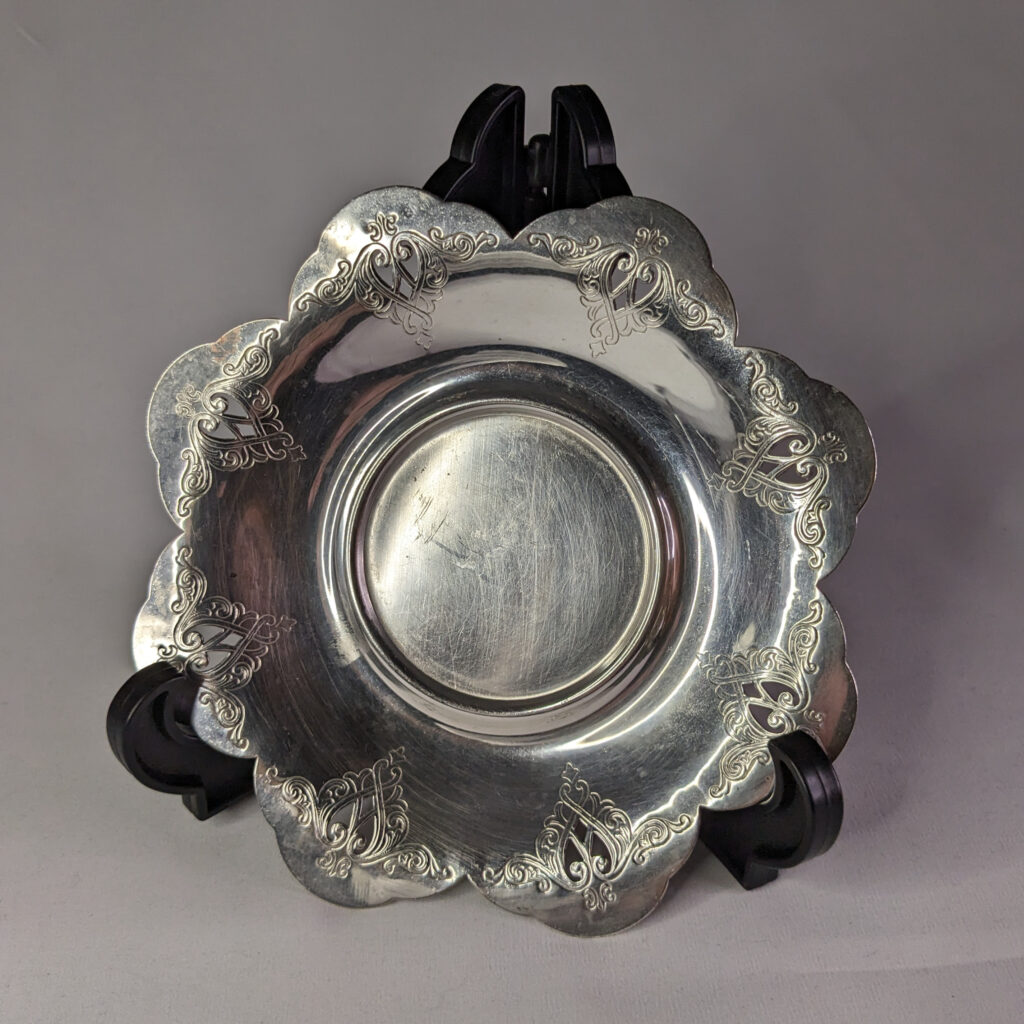
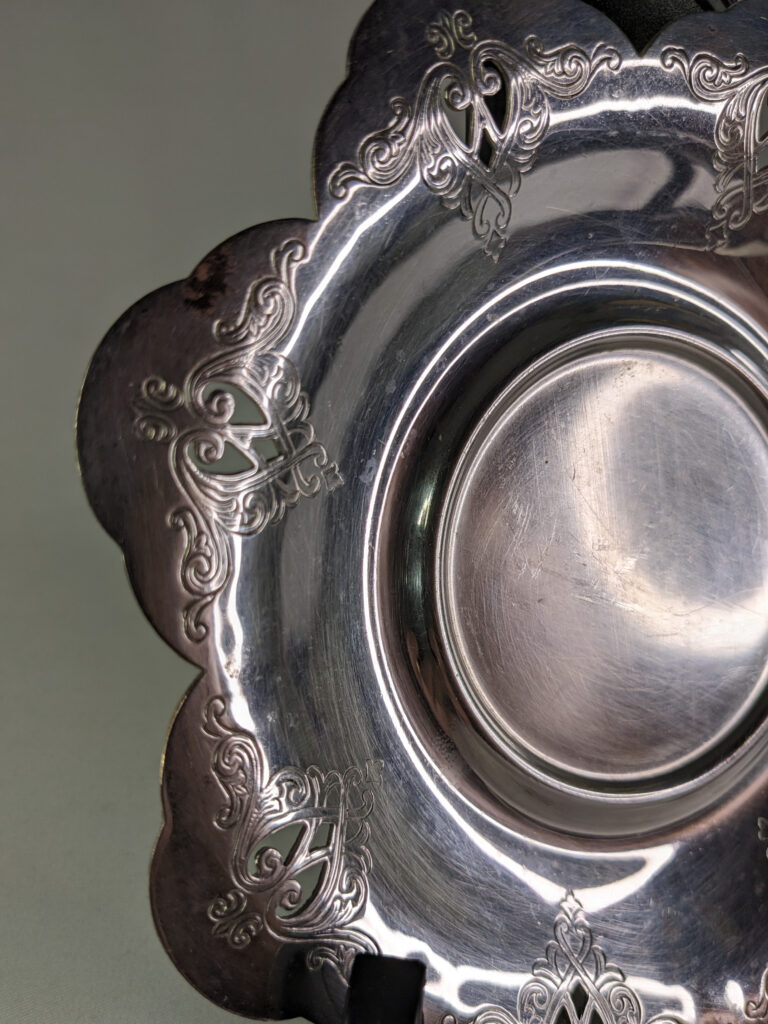
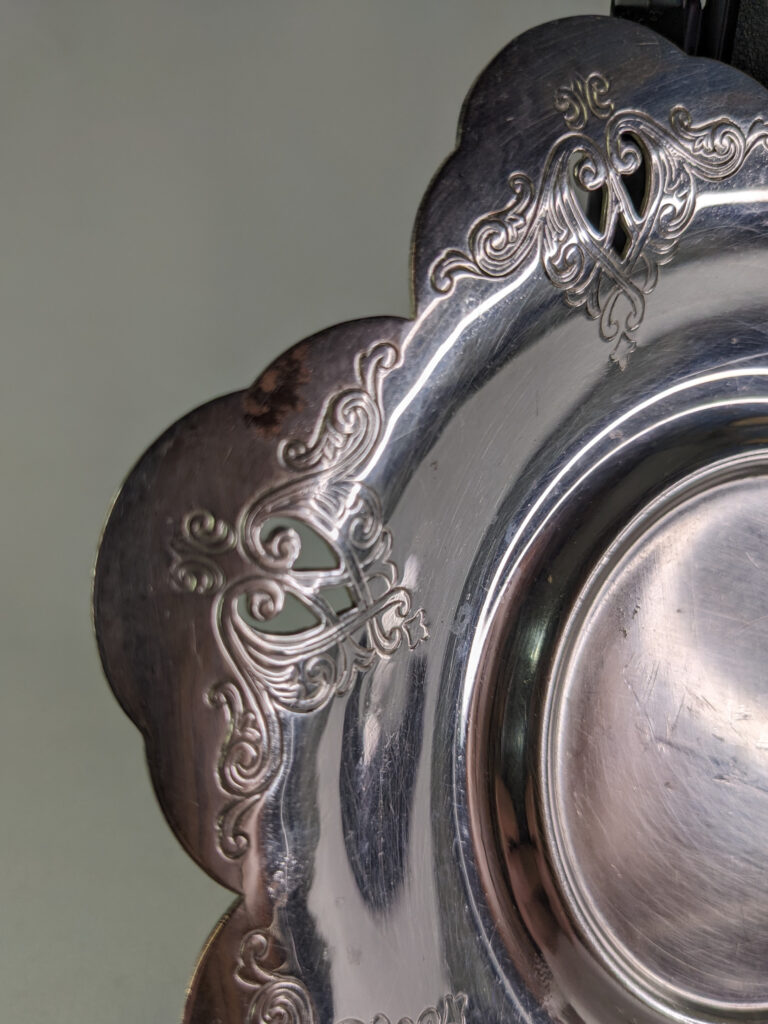
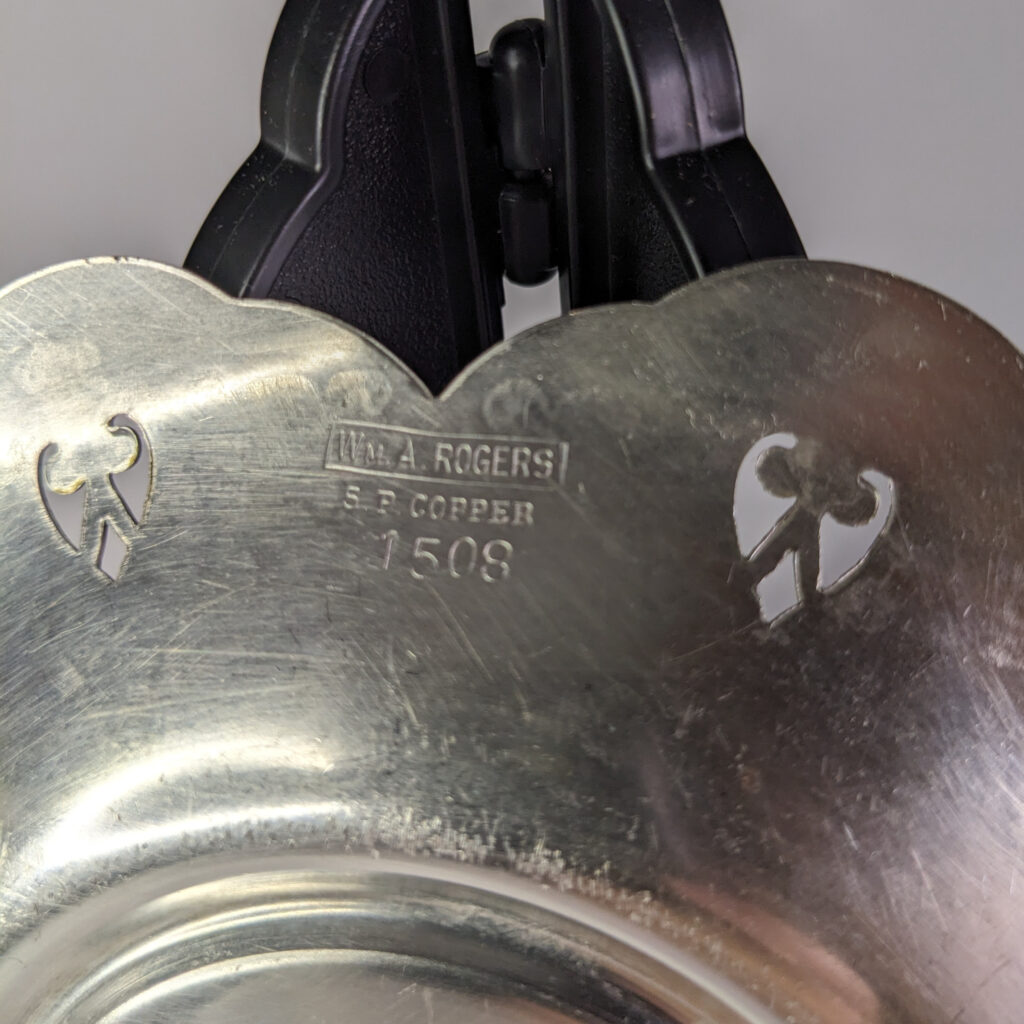
Silver-plated punched shallow bowl, Wm. A. Rogers
THE HISTORY OF WM. A. ROGERS
The story of Wm. A. Rogers begins in the late 19th century, when William A. Rogers of New York recognized a growing market for affordable yet well‑made silver-plated goods. His idea was modern for its time: combine industrial efficiency with careful hand-finishing to create pieces that looked refined, held up in daily use, and remained accessible to the middle class.
The company expanded quickly, offering everything from table silver to decorative items. Its products gained strong popularity in Canada, where local factories and distribution networks gave the brand a second life. By the early 20th century, Wm. A. Rogers had become nearly as recognizable as the older Rogers names.
COMMON ROGERS IDENTIFICATION MISTAKES
Confusion between American and Canadian Production
Canadian wares often:
– have clearer markings
– have different proportions
– have different engraving patterns
Novices often attribute Canadian wares to the early American period, which distorts dating.
Rogers’ first products quickly gained popularity in North America. The company actively expanded its range from table silver to decorative items, and gradually entered the Canadian market, where its products took root especially well. It was in Canada that the brand got a second wind: local factories, partnerships, and distribution made the name Wm. A. Rogers almost as recognizable as the older “Rogers” brands.
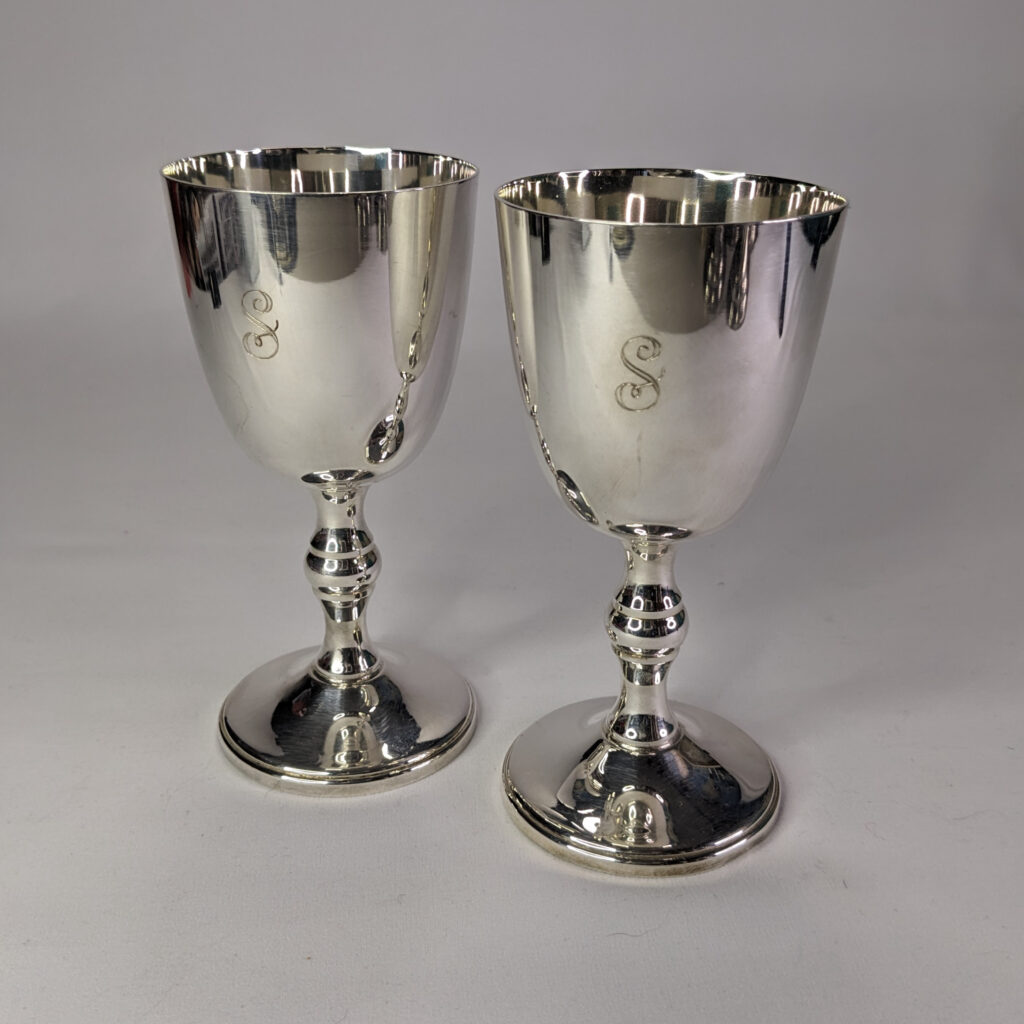
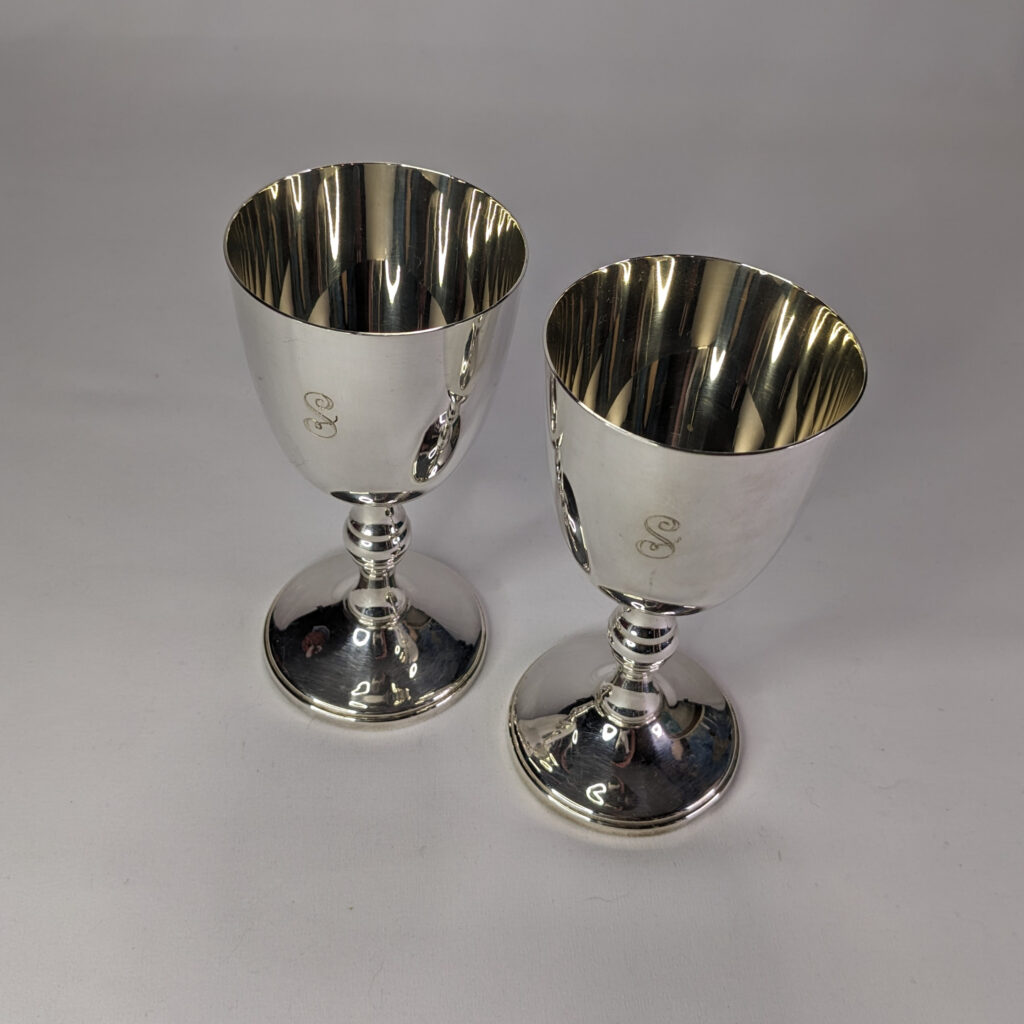
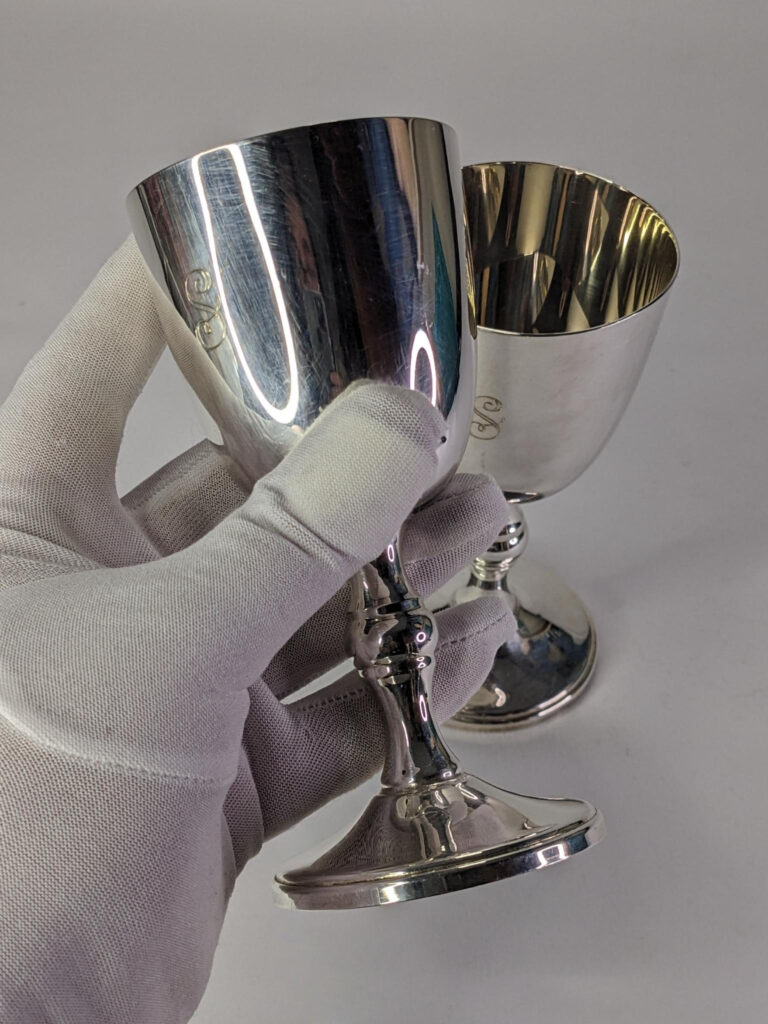
Pair of silver-plated goblets, Wm. A. Rogers
MARKINGS CAN TELL MORE THAN A CATALOG
At different times, the company used markings:
– Wm. A. Rogers
– Wm. A. Rogers Ltd.
– Wm. A. Rogers Oneida Ltd.
– A1, AA, EPNS, EPBM
These markings help identify the decade of production, the quality of the coating, and even the specific factory.
CHARACTERISTIC MARKINGS
The Wm. A. Rogers Canada mark is easy to recognize: “Wm A. ROGERS Ltd“, “Wm. A. Rogers Canada” from “Toronto, Ontario” or “Niagara Falls“. Silver-plated items have “EPBM“, “AA” or “A1“, and sterling (rare) items have “925” under the logo or “STERLING“.
Other options:
– Eagle design “eagle Wm. ROGERS star” (in sterling silver).
– Horseshoe with letter “R” on spoons.
– Wreath around logo.
– After 1929 – “WM A Rogers Oneida Ltd”.
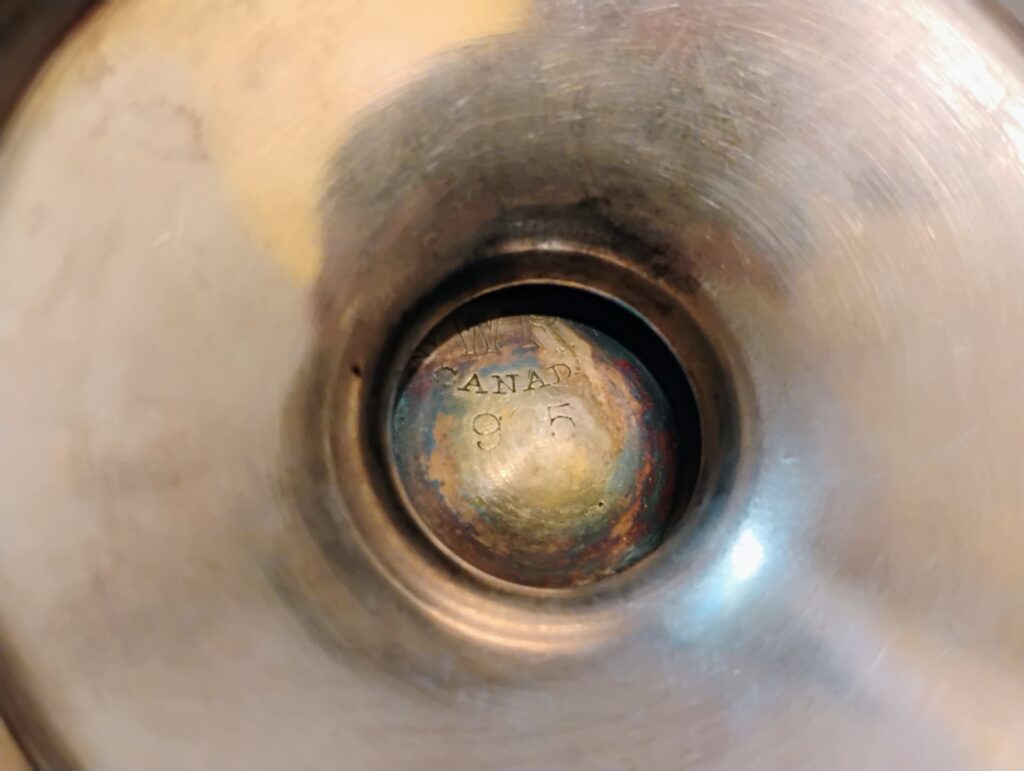
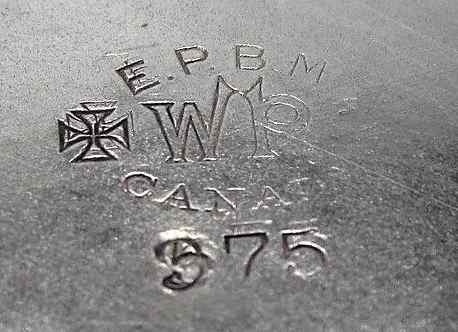
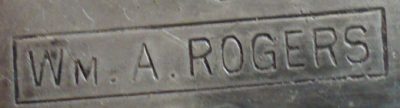
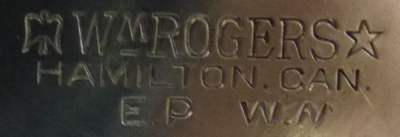
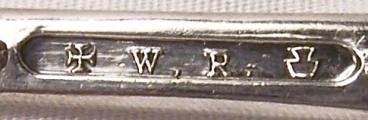
For identification, collectors recommend sites such as silvercollection.it.
WHY WM. A. ROGERS MATTERS TO COLLECTORS AND RESTORERS
The company operated during the most dynamic period of electroplating technology. Its pieces reflect the materials, alloys, and techniques of their time with remarkable accuracy. For restorers, Wm. A. Rogers items are excellent “reading material”: alloys, coating thickness, nature of stamps, changes in marking, all of which allow you to determine the decade of production and understand how the object will behave during restoration.
COMMON ROGERS IDENTIFICATION MISTAKES
Ignoring Minor Stamp Defects
Early products include:
– Slight skews
– Uneven pressure
– Microdeformations of letters
This is not a forgery, but a sign of early stamping, which beginners often perceive as a defect or forgery.
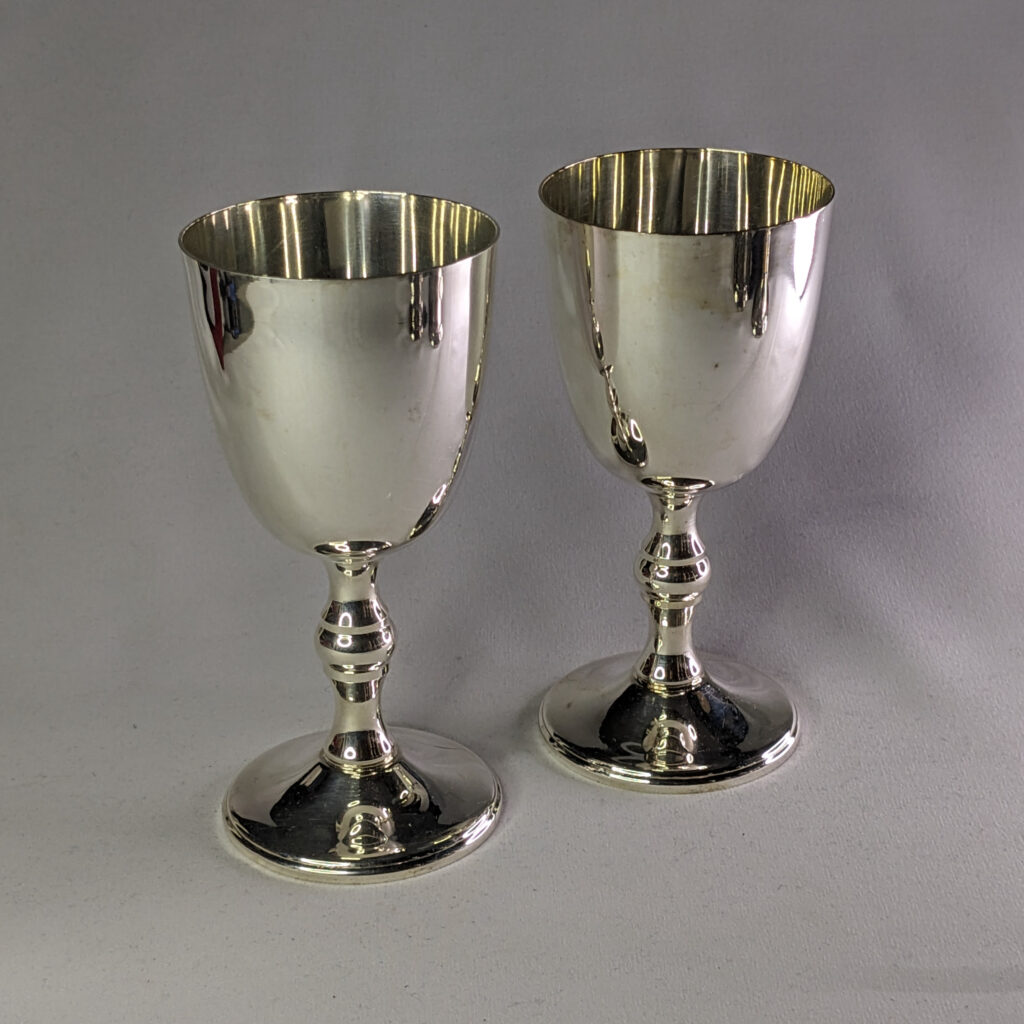
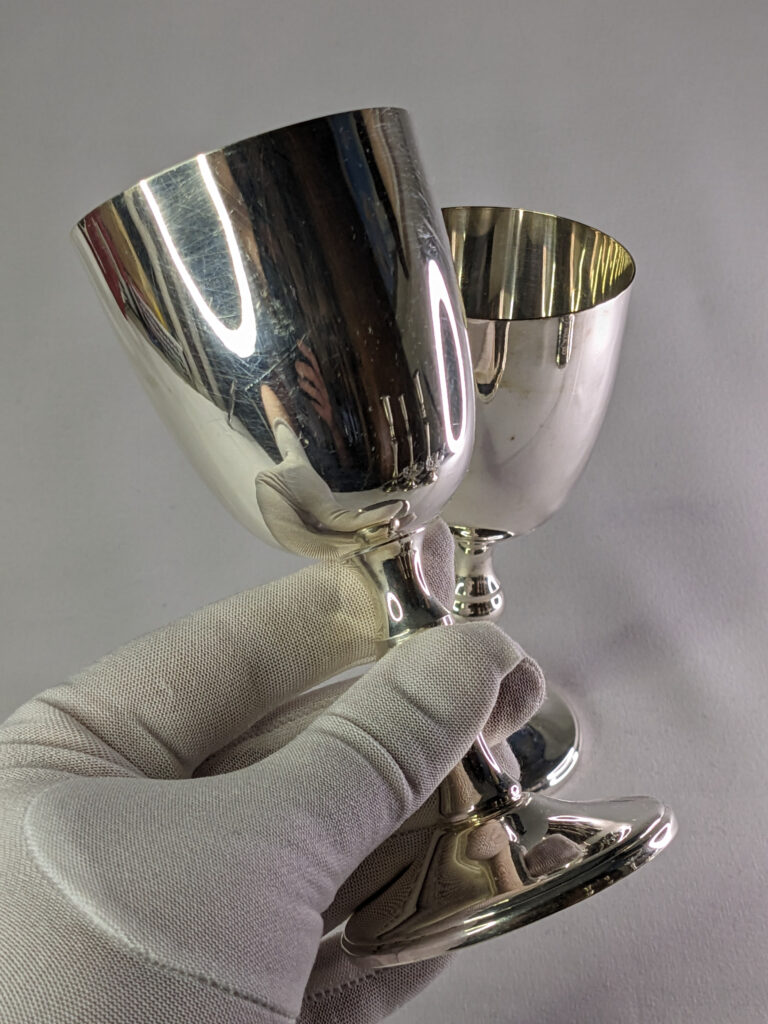
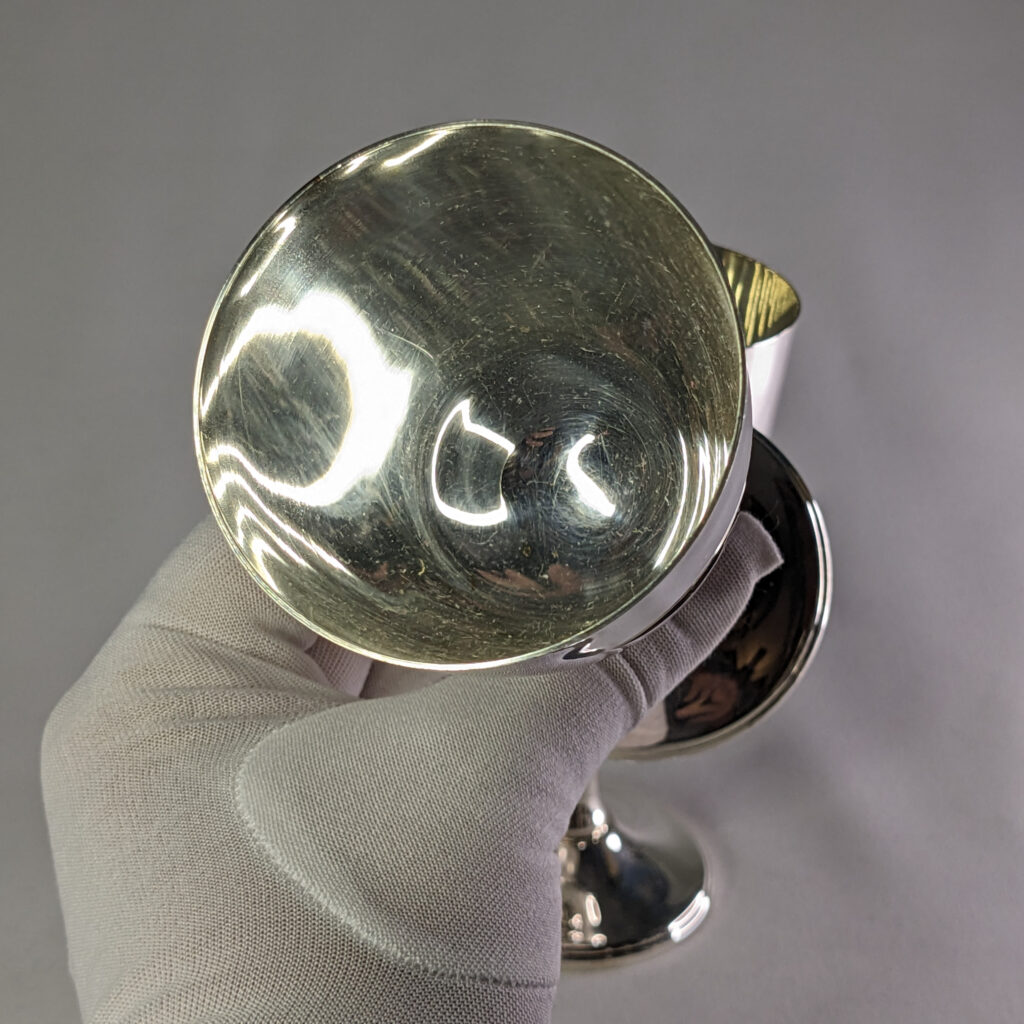
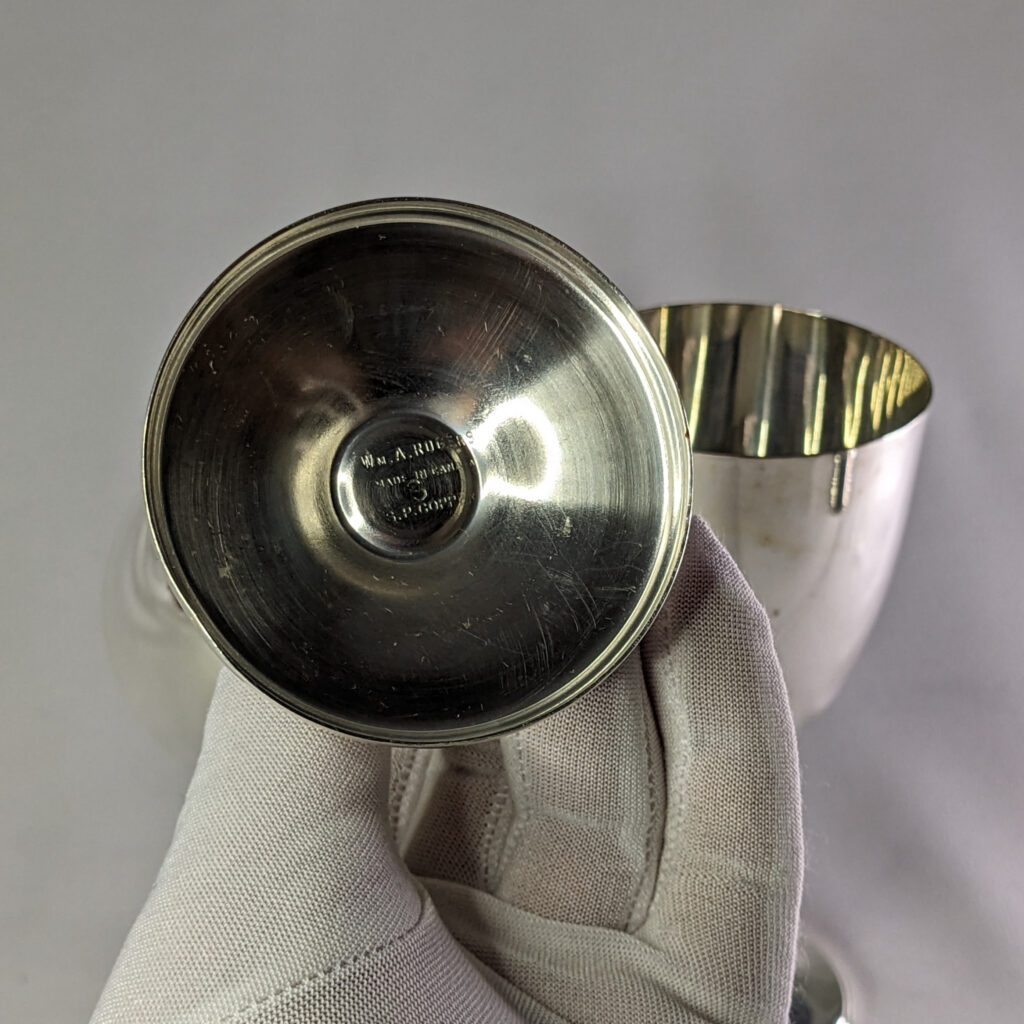
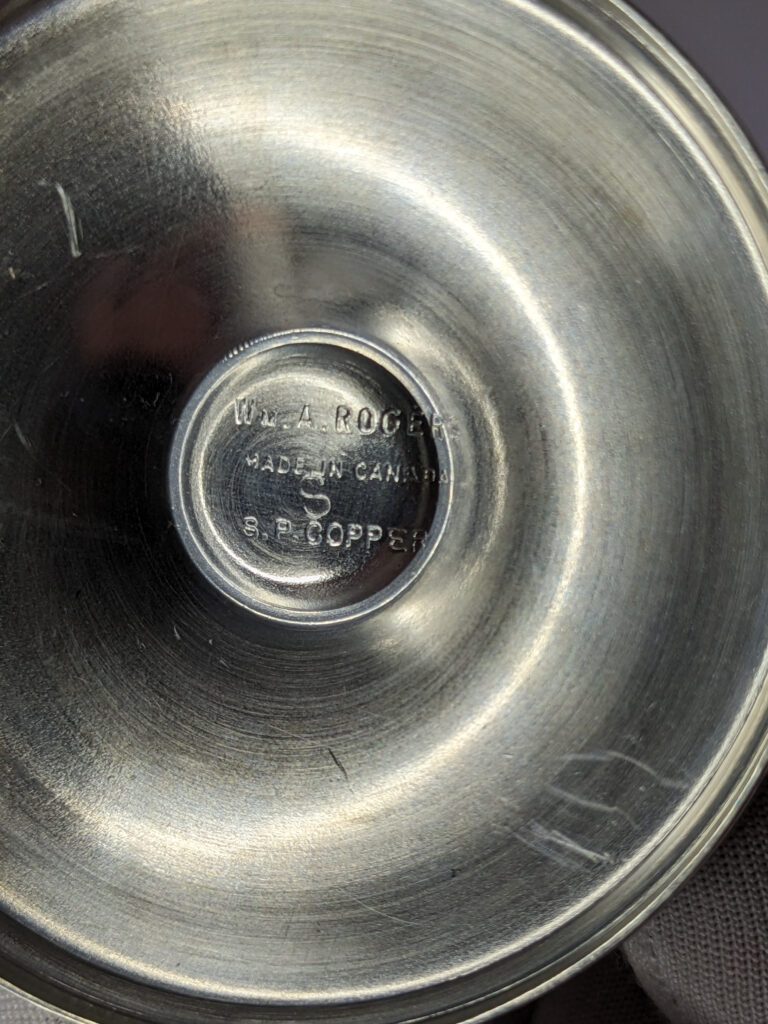
Silver-Plated Goblets pair, Wm. A. Rogers
INTERESTING FACTS FOR COLLECTORS
– William A. Rogers saw a niche between expensive sterling and cheaper alloys. His idea was simple: make beautiful, durable items affordable for the middle class without sacrificing appearance.
– Although the brand was born in the USA, it was the Canadian factories that gave it a second life. In Canada, the products became mass-produced, stable in quality, and very recognizable.
– In the early 20th century, Wm. A. Rogers actively produced spoons with the names of cities, events, and landmarks. Today, this is a separate, lively collectible category.
– Oneida did not “absorb” the brand completely – it continued to produce products under the Wm. A. Rogers brand, retaining the style and even some of the markings. Therefore, later items may have double stamps.
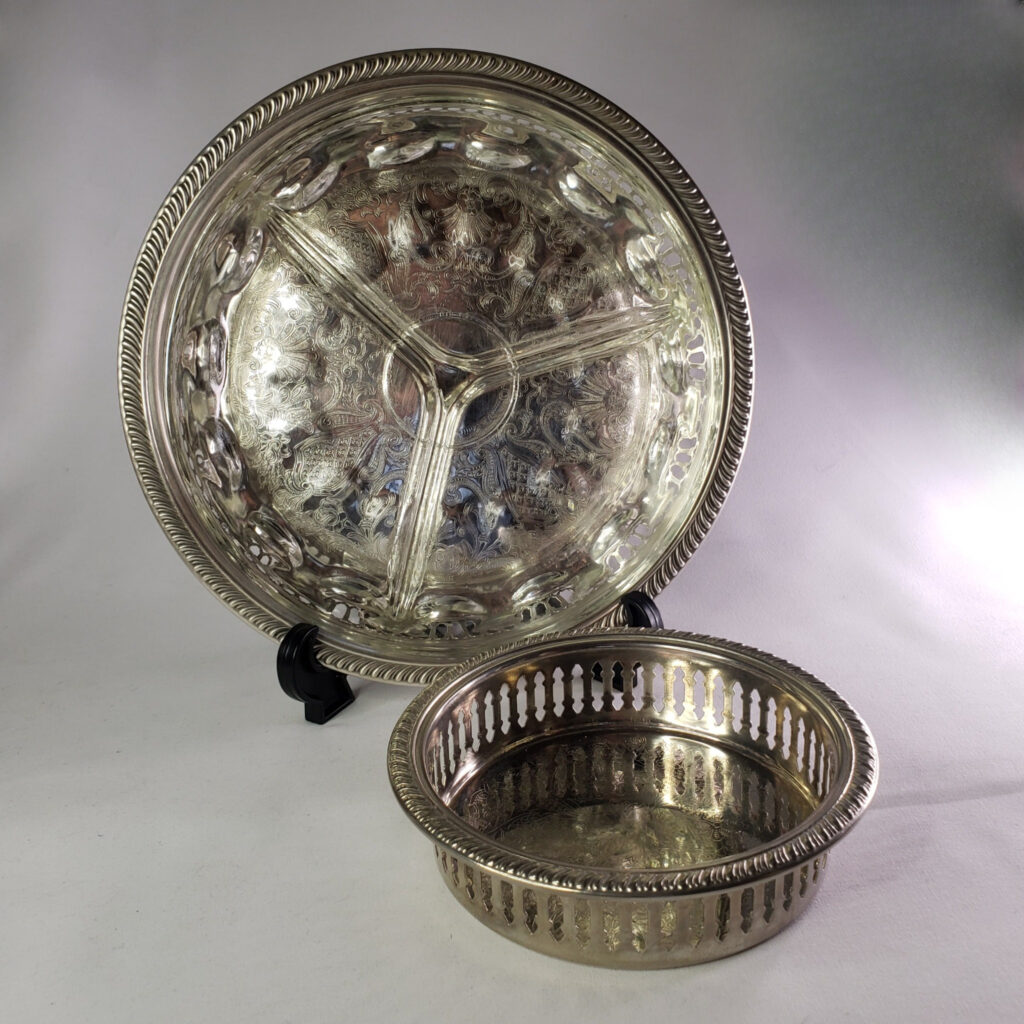
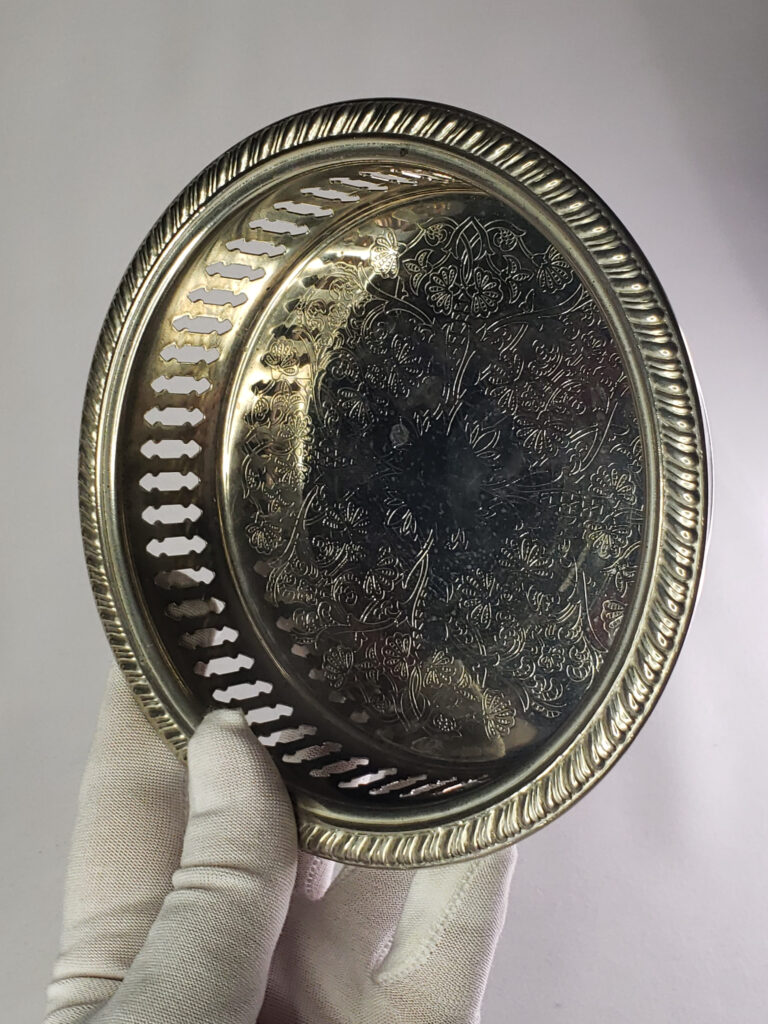
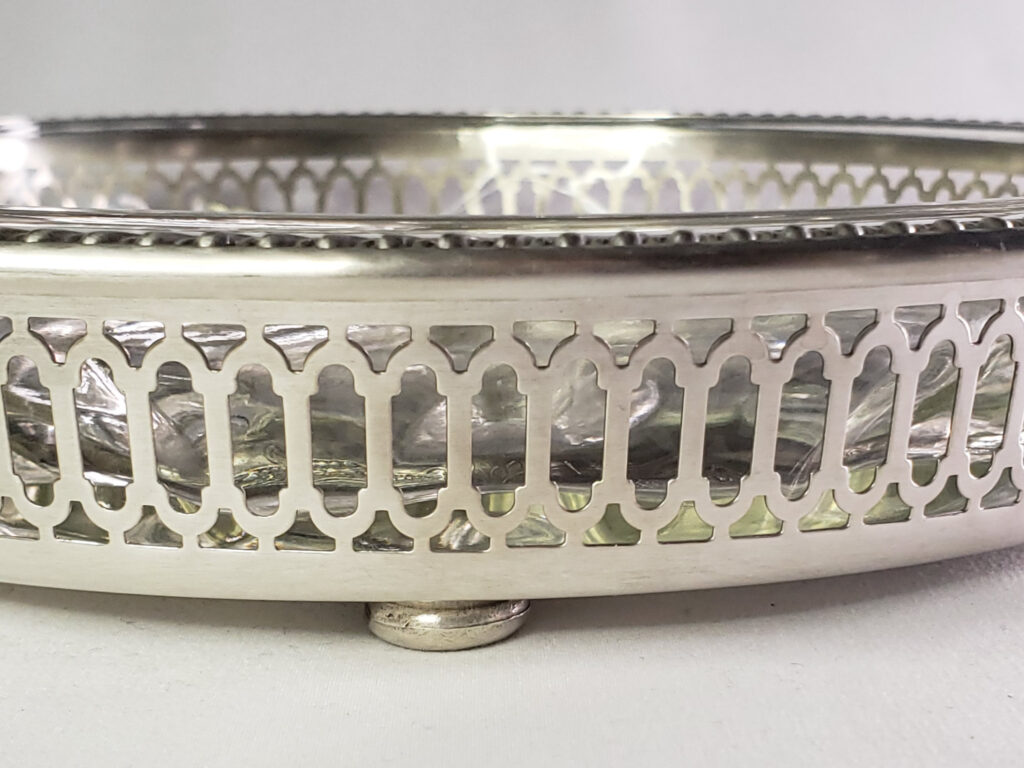
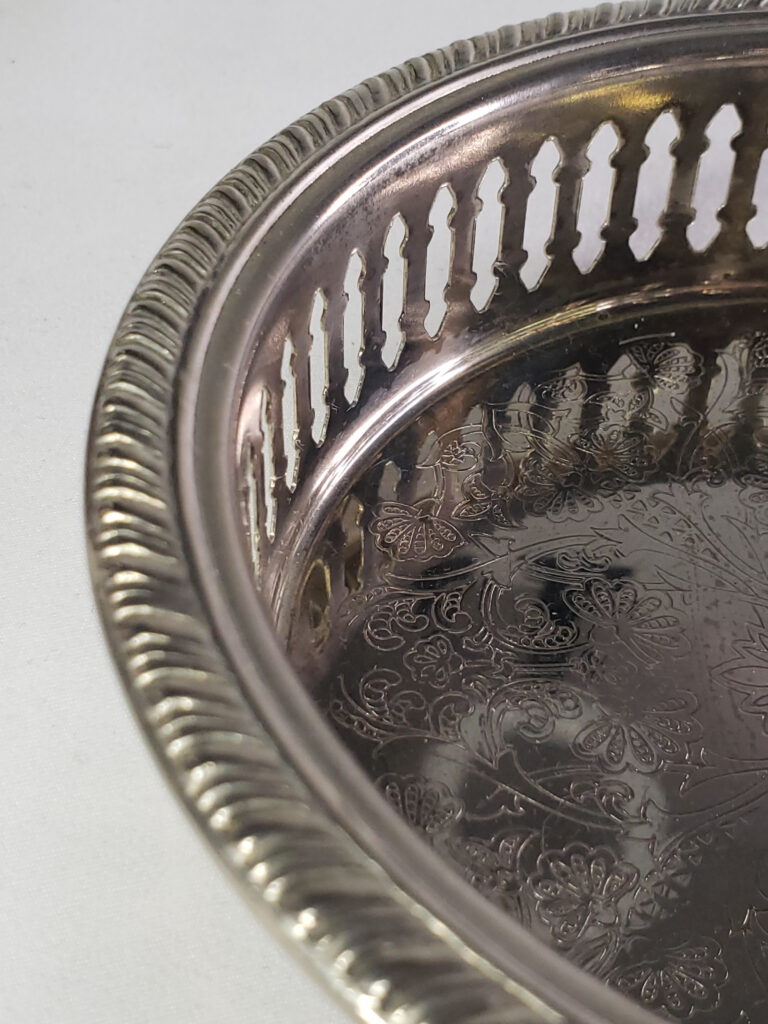
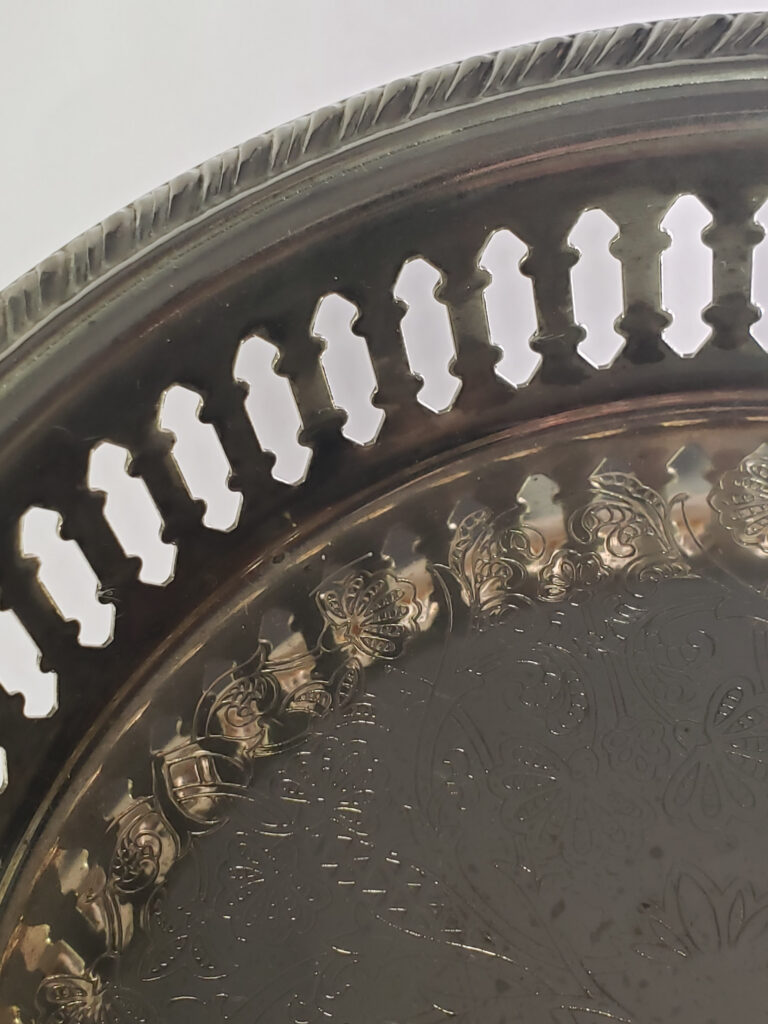
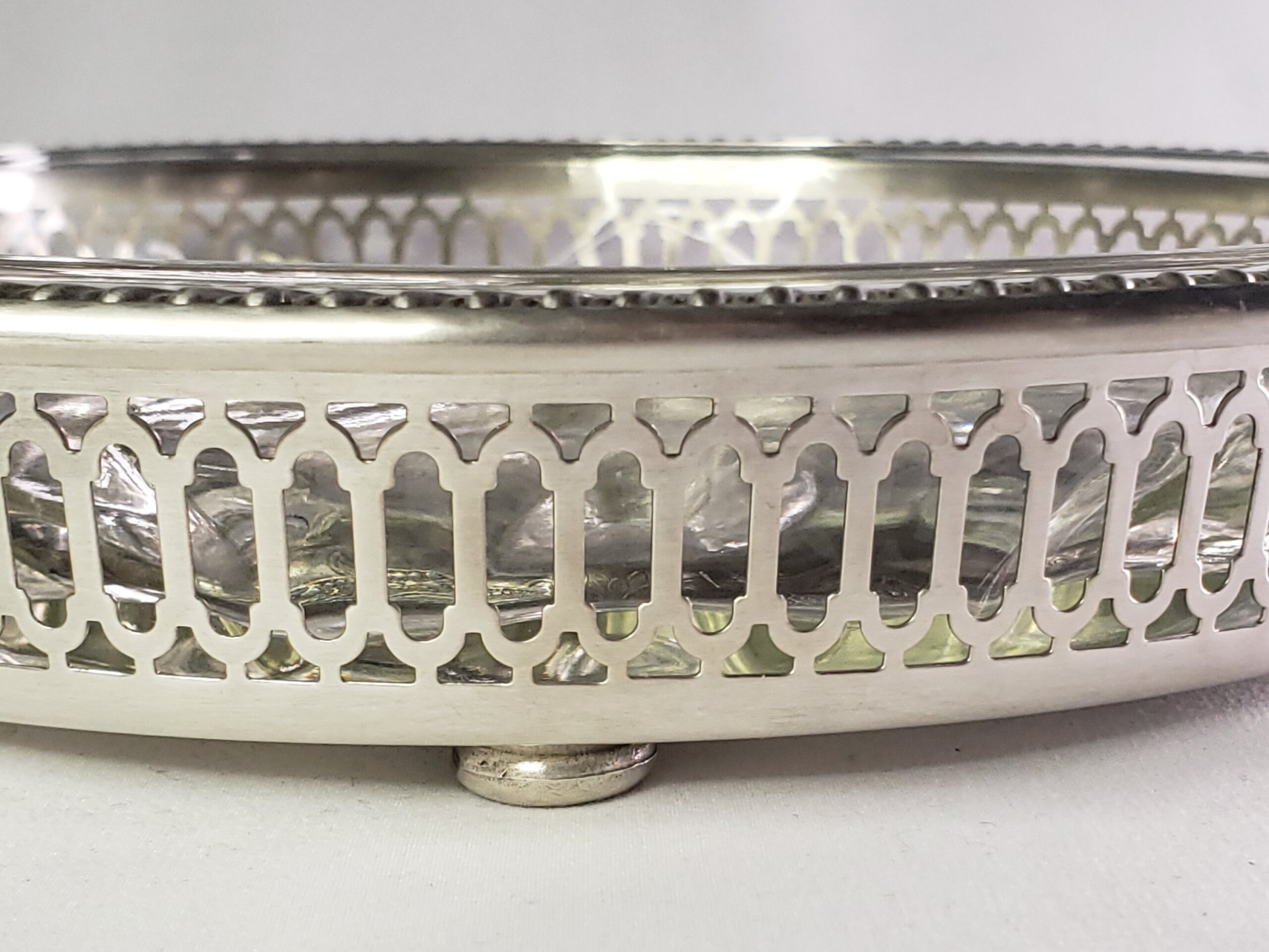
Silver-Plate Coaster or Tray with Gallery Rim, Wm. A. Rogers
Wm. A. Rogers is more than one name among many Rogers brands. It represents a blend of accessibility, consistent quality, and a strong Canadian presence that shaped everyday silverware for decades. Its pieces remain valuable to collectors for their history and to restorers for the clarity of their materials, marks, and workmanship. Understanding this brand means understanding a meaningful chapter of North American silver – one worth preserving.
SOURCES
- Silvercollection.it. Rogers manufacturers. https://www.silvercollection.it/rogerssilvermanufacturers.html
- Silvercollection.it. Canada Silversmiths marks. https://www.silvercollection.it/CANADASILVERSMITHSR.html
- 925-1000.com. Wm A Rogers spoon mark. https://www.925-1000.com/forum/viewtopic.php?t=16481
- Silver-Collector.com. Wm A Rogers 925 logo. https://www.silver-collector.com/t/wm-a-rogers-ltd-canada-logo-with-925-under-it/20122
- Parks Canada. Trademarks PDF. http://parkscanadahistory.com/series/saah/trademarks.pdf
- Antiquesilver.org. Wm Rogers history. https://antiquesilver.org/how-to-identify-a-wm-rogers-silver-plate-history-of-william-rogers/
- Silver Blog. Rogers confusion. http://silverandsilverplate.blogspot.com/2010/04/clearing-up-rogers-confusion-marks-and.html
Comments are closed